
Your Garage Door Springs Won't Last Forever — Here's How to Stay Ahead
If you've ever had a garage door spring snap, you know how jarring it can be. One moment everything is working fine, and the next there's a loud bang that sounds like a gunshot echoing through your garage. Suddenly, your door won't open, your car is trapped inside, and you're scrambling to find a repair company.
The good news is that garage door springs rarely break without warning. There are almost always signs that they're wearing out — you just need to know what to look for. Here in Lodi, where temperature swings between hot summers and cool winters put extra stress on metal components, paying attention to your springs can save you from an inconvenient and potentially dangerous failure.
Why Garage Door Springs Wear Out
Garage door springs are under enormous tension. They bear the full weight of your garage door — typically between 150 and 250 pounds for a standard residential door — every single time it opens and closes. Most torsion springs are rated for about 10,000 cycles, which means roughly 10,000 open-and-close operations.
For the average household that opens their garage door four times a day, that works out to about seven years of use. If you use your garage door more frequently — say, as your primary entrance to your home — those springs could wear out even sooner.
Temperature fluctuations also play a role. Metal expands and contracts with heat and cold, and over time this repeated stress weakens the spring. For homeowners in Lodi and the surrounding Central Valley, where summer temperatures regularly exceed 100°F and winter mornings can dip near freezing, this thermal cycling accelerates wear.
7 Warning Signs Your Springs Are Failing
1. Your Door Feels Heavier Than Usual
Try this simple test: pull the emergency release handle to disconnect the door from the opener, then manually lift the door about halfway. A properly balanced door with healthy springs should stay in place on its own. If it feels unusually heavy or slides back down, your springs are losing tension and struggling to support the door's weight.
2. The Door Opens Slowly or Unevenly
If your garage door hesitates, jerks, or rises crookedly when opening, one or both springs may be weakening. This is especially noticeable with extension spring systems, where one spring can lose tension faster than the other, causing the door to tilt to one side.
3. You Hear Squeaking or Grinding Noises
While some noise is normal, new or worsening squeaking, popping, or grinding sounds when the door operates can indicate that springs are under uneven stress or that the coils are starting to separate. Don't ignore unusual sounds — they're your door's way of telling you something is wrong.
4. Visible Gaps in the Spring Coils
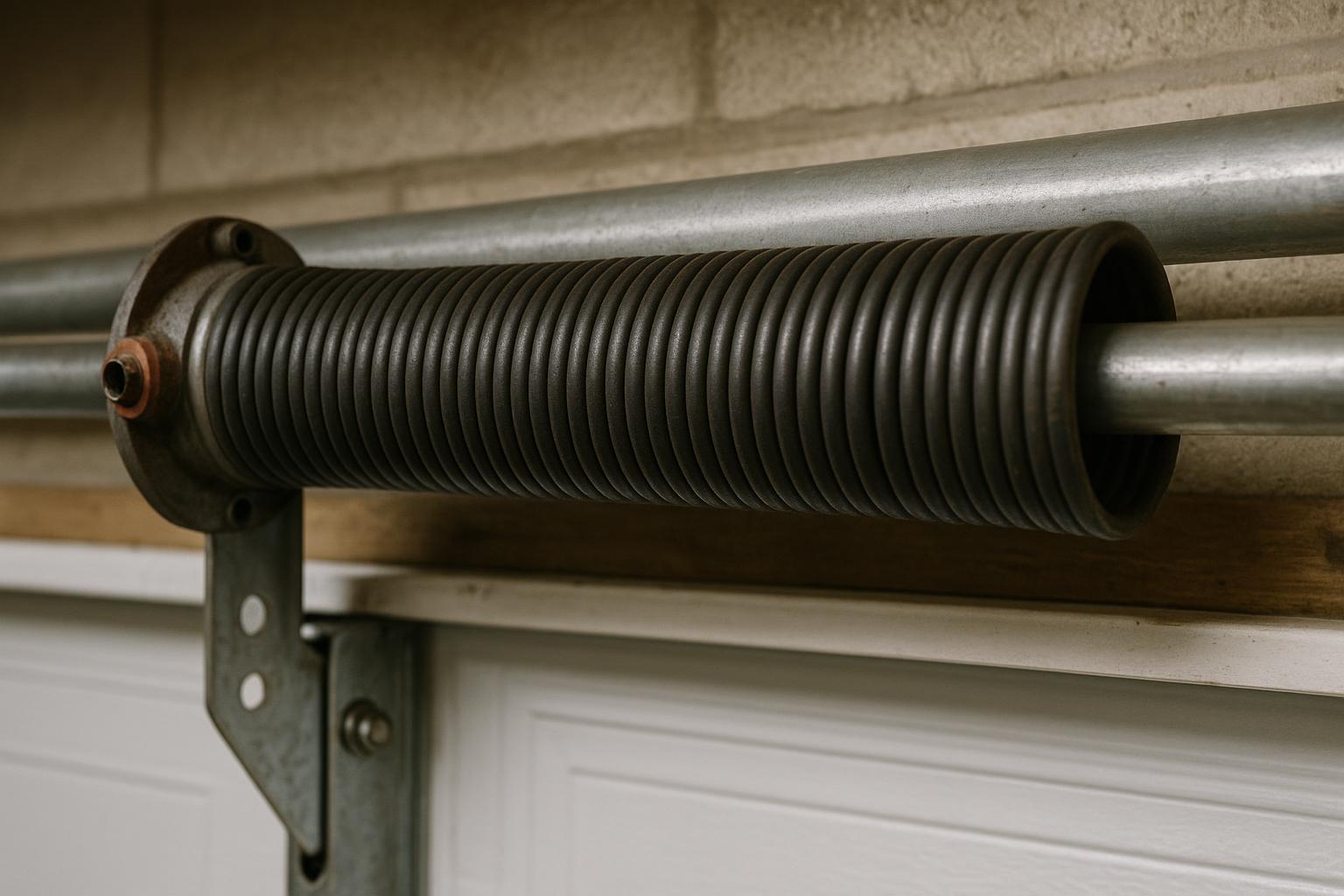
Take a look at your torsion spring, which is the tightly wound spring mounted on a metal shaft above your garage door. A healthy spring has coils that are tightly and evenly wound together. If you notice gaps between the coils or sections where the spring looks stretched out, it's a clear sign of wear and an indication that failure could be imminent.
5. The Door Slams Shut Quickly
Springs act as a counterbalance to control the speed at which your door closes. If your garage door drops faster than normal or slams shut, the springs are no longer providing adequate resistance. This is both a sign of spring failure and a serious safety hazard, especially if you have children or pets.
6. Your Opener Is Straining
When springs weaken, your garage door opener has to work harder to lift the door. If you notice your opener motor running louder, vibrating more, or struggling to complete the cycle, worn springs could be the underlying cause. Continuing to run the opener under these conditions can burn out the motor, turning a spring replacement into a much more expensive repair.
7. Rust on the Springs
Rust weakens metal and increases friction between the coils, which accelerates wear. If your springs show visible rust or corrosion, their lifespan is being significantly shortened. Regular lubrication can slow this process, but heavily rusted springs should be inspected by a professional.
What to Do If You Notice These Signs
If you've spotted one or more of these warning signs, the most important thing is to not try to replace the springs yourself. Garage door springs are under extreme tension, and attempting a DIY repair without the proper tools and training can result in serious injury or even death. This is not an exaggeration — emergency rooms treat thousands of garage door spring injuries every year.
Instead, call a qualified garage door technician to inspect your springs and provide a professional assessment. A trained technician can measure the remaining life of your springs, check the overall balance of your door, and replace the springs safely using the correct size and type for your specific door.
Can You Extend the Life of Your Springs?
While no spring lasts forever, regular maintenance can help you get the most out of them. Here are a few things you can do:
- Lubricate your springs every six months with a silicone-based garage door lubricant. This reduces friction and helps prevent rust.
- Schedule annual maintenance with a professional who can check spring tension, balance the door, and identify early signs of wear.
- Minimize unnecessary cycles. If you tend to open and close your garage door multiple times in a row, try to reduce those extra cycles to extend spring life.
- Consider high-cycle springs when it's time for replacement. These are rated for 25,000 or even 50,000 cycles and can be a smart investment if you use your garage door frequently.
Why Lodi Homeowners Trust Us for Spring Replacement
At Lodi Garage Door, we've seen every type of spring failure imaginable. We understand that a broken spring isn't just an inconvenience — it can disrupt your entire day, leave your home unsecured, or even put your family at risk. That's why we prioritize fast response times and carry the most common spring sizes on our trucks so we can handle most replacements in a single visit.
We serve homeowners throughout Lodi, Stockton, Galt, Woodbridge, Acampo, and Lockeford with honest pricing and no surprise fees. When we inspect your springs, we'll tell you exactly what we find and give you straightforward options — whether that means a simple adjustment, a standard replacement, or an upgrade to high-cycle springs for longer-lasting performance.
Don't Wait for the Bang
A snapped garage door spring is one of those problems that feels sudden but almost never is. The warning signs are there if you know where to look. Take five minutes this weekend to check your springs, test your door's balance, and listen for unusual sounds. If anything seems off, give us a call before a small concern turns into a big problem.
Your garage door works hard for you every day. A little attention now can prevent a lot of frustration later.